
Who Is Your Target Audience and how to determine them?
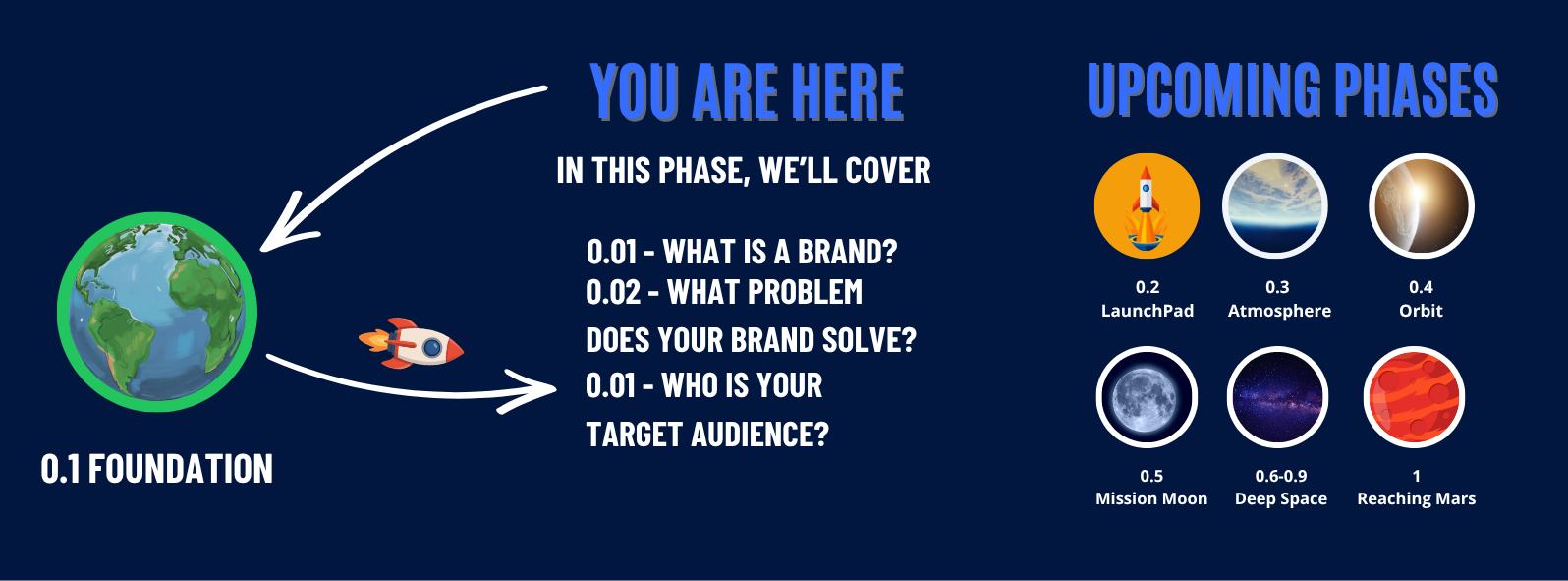
If you have understood why your brand exists and what problem you are gonna take on, determining the target audience is the logical next step, your target audience is the one you are making content for in the hope of converting them into paying customers somewhere down the line.
As soon as you can form an idea of an ideal audience for your brand, it’ll be much easier to determine where you have to spend your energy rather than shooting everywhere in the hope of hitting a sale.
Both branding and determining target audience works together with each other as optimising your brand for middle aged people wouldn’t make sense if you are selling apparels for colleges, it doesn’t mean you wouldn’t sell to them, it just means you wouldn’t optimise for them.
Demographics vs Psychographics
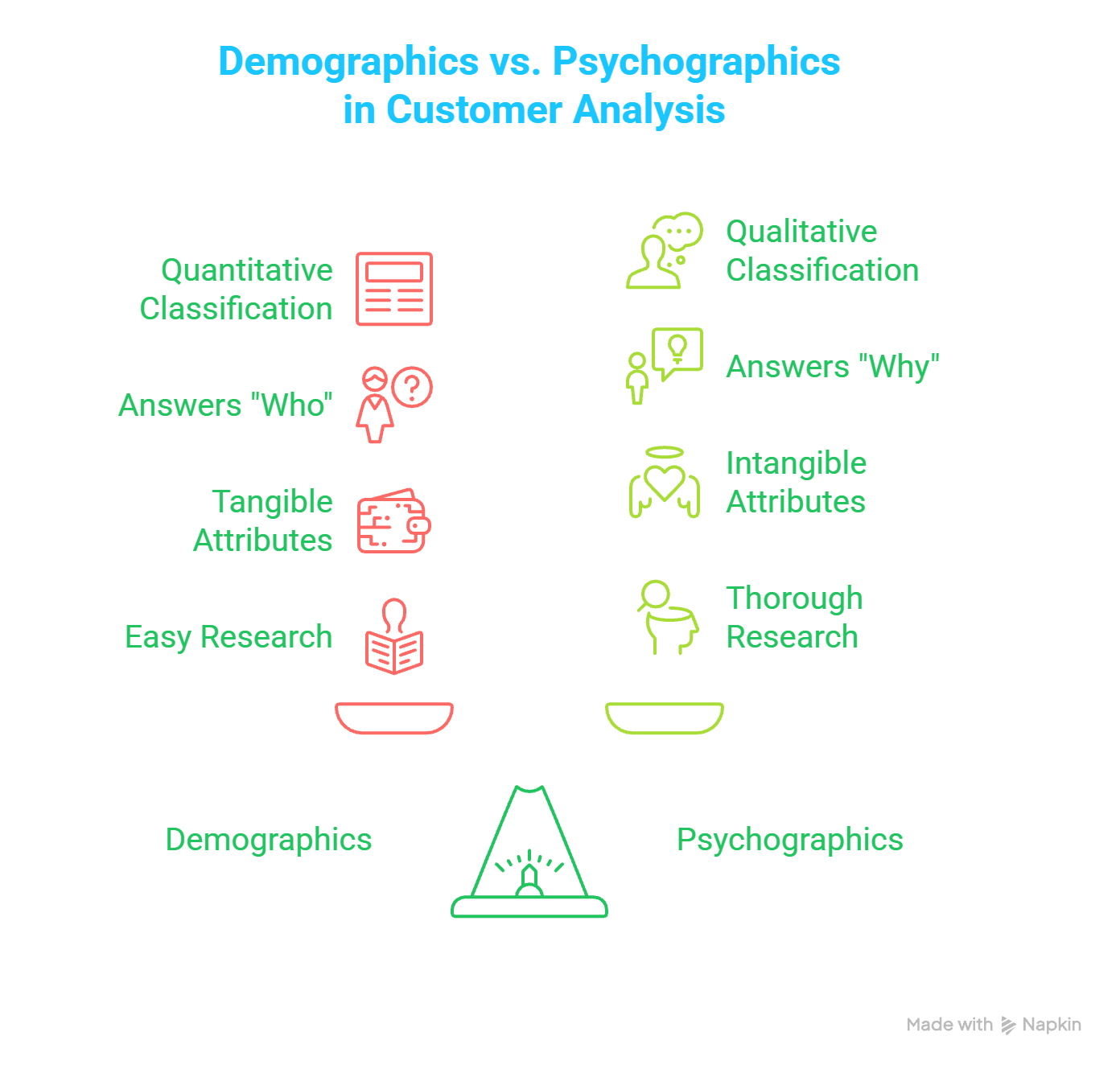
Demographics simply determine who your audience is while psychographics determine why they act the way they do.
Demographics is a quantitative classification which answers the “Who” part of the equation and has attributes like where your customer resides along with their age, income, occupation, marital status, etc most of which you can pen down without hovering over multiple tabs.
Psychographics is a qualitative classification also called the buyers persona which answers the “Why” part of the equation and has attributes like values, personal beliefs, personality traits and daily behaviour which needs thorough market research.
In a nutshell demographics tells you who is buying the product and psychographics tells you why they are buying the product. This helps the team making the marketing campaigns reach the customer on a much more psychological level increasing not only the conversion rate of the said campaign but making loyal customers for the brand.
In a nutshell demographics tells you who is buying the product and psychographics tells you why they are buying the product. This helps the team making the marketing campaigns reach the customer on a much more psychological level increasing not only the conversion rate of the said campaign but making loyal customers for the brand.
Does Branding Determine Target Audience?
When you first start your brand and work upon its branding, you are indirectly optimising your brand for an audience you haven’t saved on a spreadsheet yet. Your company tone of voice, logo, colour palette, typography etc which is visible to everyone will only attract a fraction of all who see it. Consider this as a natural setting you are provided with before the actual one in tools you’ll be using later.
Segregating Target Audience and Ideal Customer
Anyone can buy your product but not everyone can become your brand advocate where the discussion around your sector is taking place.
Target Audience can be categorised as a general group of people who can resonate with your products for example any man between the age of 25 to 29 who is employed can buy a bike and it makes sense for brands to optimise their campaign for them.
Ideal customers on the other hand refer to people who are specially made for your project. In an easier sense they are mostly a subset of the target audience just with more attributes. They are and can be recognised by proper market research or just competition sales data.
Continuing with the above example, consider a boy who lives in Dwarka and has to travel to Noida for a job. His ideal route would be the erikshaw, metro and erikshaw again to reach his office and repeat the same process in the evening. If the person is now looking at a job switch and Gurgaon is on his radar, a bike is the ideal replacement for his commute as it cuts the time along with daily expenses making the purchase of the vehicle meaningful.
Reaching this particular customer is what every brand wants to achieve for maximum conversion making it the toughest and most important part of any marketing campaign.
Cutting Through Noise To Reach Ideal Customer
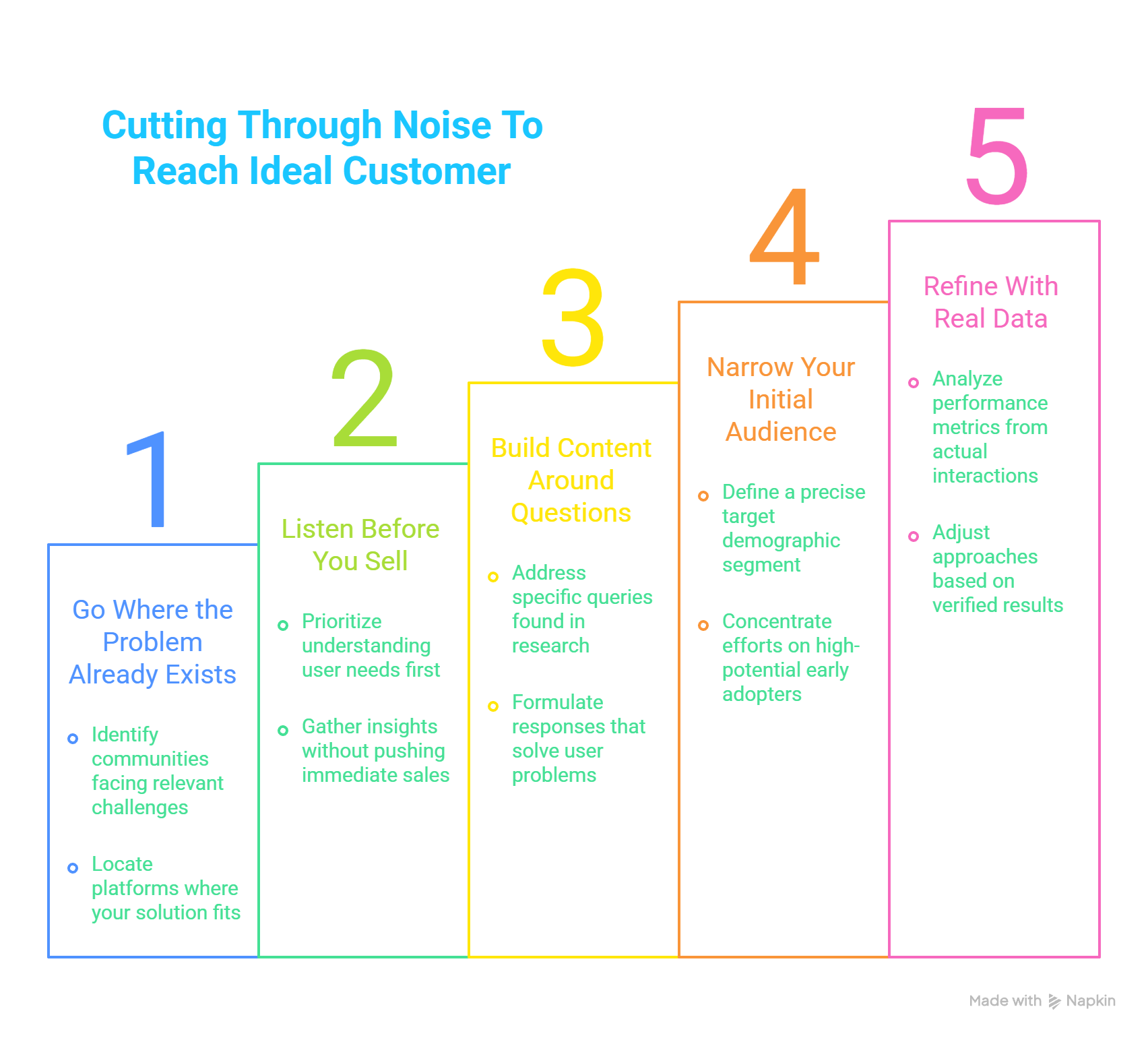
The best way to reach those ideal customers is to make a good product and then have the business sustain for enough time that you build a good brand and develop a niche of customers who advocate for your brand. There are some particular methods though which can cut short that time and help you reach the ideal customers much earlier. They are
1. Go Where the Problem Already Exists
Most marketers make the mistake of trying to manufacture demand which is shouting into a void and hoping someone listens.
But the truth is, people are already out there talking about their problems, every single day, in places you’re probably not paying attention to.
Your job isn’t to create a conversation from scratch. It’s to find the conversation that’s already happening and show up in it. Your actual customers are present in forums more than paid surveys. Some common place you can look are
– Quora
– Facebook Groups
– Industry forums
– Google Search (People also ask)
– YouTube comments
2. Listen Before You Sell
Here’s where most brands trip up: the moment they get access to an audience, they start pitching. But nobody wants to be sold to before they feel understood.
The smarter move is to sit back and actually study how people talk about the problem you solve especially through the lens of your competitors’ customers, who are often brutally honest.
– Read reviews of competitors.
– Look at 1-star and 5-star reviews.
– Observe repeated complaints.
– Notice the exact words customers use.
Your audience tells you how to market to them if you’re willing to listen.
3. Build Content Around Questions
People don’t wake up searching for a product. They wake up with a problem, and they type that problem into Google and nowaday AI too. If your content is built around your business instead of their question, you’re speaking a language they never asked to hear.
Instead of writing:
“Why Our SEO Agency Is the Best”
Write:
“Why Is My Website Not Ranking?”
The first promotes your business. The second solves a problem and solving problems is what earns trust before a sale ever happens.
4. Narrow Your Initial Audience
There’s a strange kind of comfort in trying to appeal to everyone, but it almost always backfires. When you speak to everyone, you sound generic enough that nobody feels like you’re speaking to them specifically.
It’s often easier to become the obvious choice for a small group than an average choice for everyone. As your brand grows, your audience can grow with it.
5. Refine With Real Data
Your first audience isn’t the final answer, it’s a starting guess. The real picture only emerges once actual people start interacting with what you’ve built, and the data starts talking back. Eventually we refine our content and all of the following will come in handy later on
– Google Search Console
– Google Analytics
– Social media insights
– Customer feedback
– Comments
– DMs
– Sales enquiries
Don’t be afraid to adjust your audience profile as you learn more. The market will always be a more honest teacher than your assumptions.
Before moving to the next blog, answer these questions:
- Who is my target audience?
- Who is my ideal customer?
- What problem are they trying to solve?
- Where do they currently spend time online?
- What words would they use to describe their problem?
- What type of content would genuinely help them?
- Why would they choose my brand over an alternative?
If I could only market to one person for the next year, who would that person be?
Go from 0 to 1 In Digital Marketing
With
Psyden Crafts
Launchpad Resources
Launchpad Blogs
What is a brand? Before you think about SEO, Social Media and any other form of marketing, you should ask one question, what is a brand?
Each company you encounter if you look outside the screen you are reading this on solves some kind of problem so before you start marketing, ask your self What Problem Does Your Brand Solve?
