Internal Linking Prompt
Internal linking is one of the most overlooked SEO strategies but it plays a crucial role in improving rankings, crawlability, and user experience.
This prompt helps you create a structured internal linking strategy using tools like ChatGPT in minutes.
This prompt helps you:
- Identify internal linking opportunities
- Suggest relevant pages to link
- Generate anchor text variations
- Improve content hierarchy
- Strengthen topical authority
Internal Linking Prompt (Copy & Use)
Act as an SEO expert.

Analyze the following content and suggest an internal linking strategy.

Content: [PASTE YOUR CONTENT]

Existing Pages (optional): [LIST YOUR BLOG URLs]

Requirements:

1. Internal Linking Suggestions:
- Suggest relevant internal pages to link
- Identify natural placement within the content

2. Anchor Text Guidelines (STRICT – follow carefully):
- Anchor text must be descriptive, concise, and relevant to both the current page and the linked page
- Avoid generic phrases like “click here”, “read more”, “this page”
- Avoid keyword stuffing or unnatural phrasing
- Keep anchor text short but meaningful (not too long or sentence-like)
- Anchor text should make sense even when read alone
- Ensure it clearly indicates what the linked page is about

3. Contextual Placement:
- Ensure links fit naturally within sentences
- Maintain proper context before and after the link
- Avoid placing multiple links next to each other without context

4. Output Format:
For each suggestion provide:
- Target page
- Recommended anchor text
- Suggested placement (sentence or section)

5. Additional Suggestions:
- Suggest new content ideas if internal links are missing
- Improve topical authority through linking structure

Goal:
Create a clean, user-friendly internal linking strategy that improves both SEO and readability.
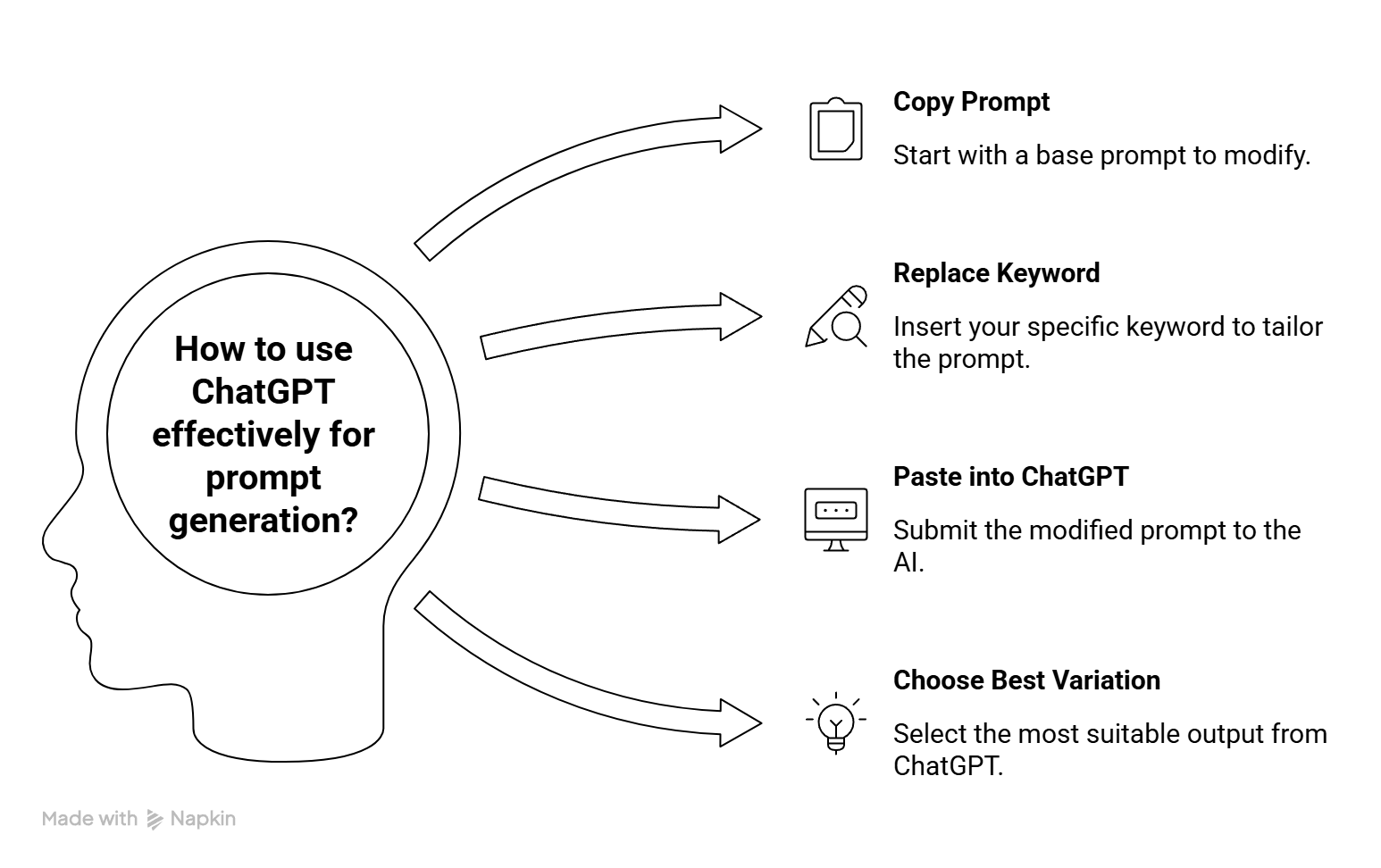
How to Use This Prompt ?

Best Practices You Should Follow
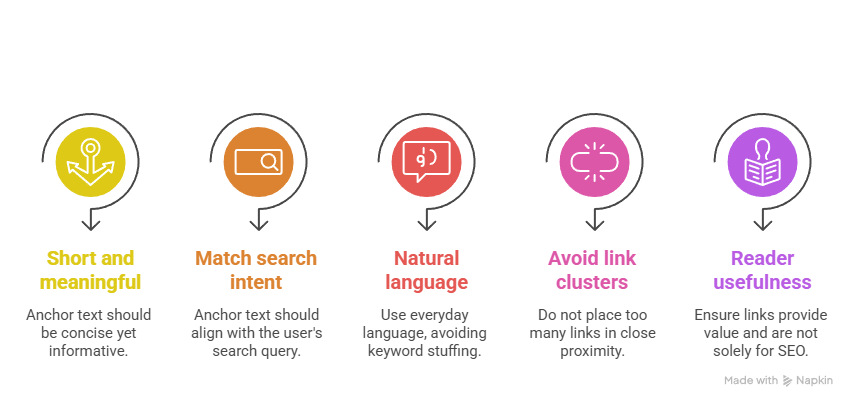
- Keep anchor text short but meaningful
- Match it with search intent of the target page
- Use natural language (not forced keywords)
- Avoid placing too many links close together
- Make links useful for the reader—not just for SEO